Can You Find a Building Today from a Sketch Drawn Centuries Ago?
Bu çözümün Türkçesi de var: sağ üstten dili TR yapın.
How a colorized drawing, a reverse image search, and Google Street View led me to a 500-year-old tower in northern Germany.
Art can take us to fantastic places, but artists also study the world carefully. Their sketches can outlast centuries, and sometimes we can still recognize the place they drew. This challenge started with one such sketch: a pencil drawing of a tower, and a question about what the building next to it says today.
The sketch
The only thing I had was a drawing of a tall, square, brick-looking tower with a steep roof, a half-timbered section just below the roof peak, and a wooden bridge in front. A small figure stands on the bridge, and a timber-clad building sits at its foot.
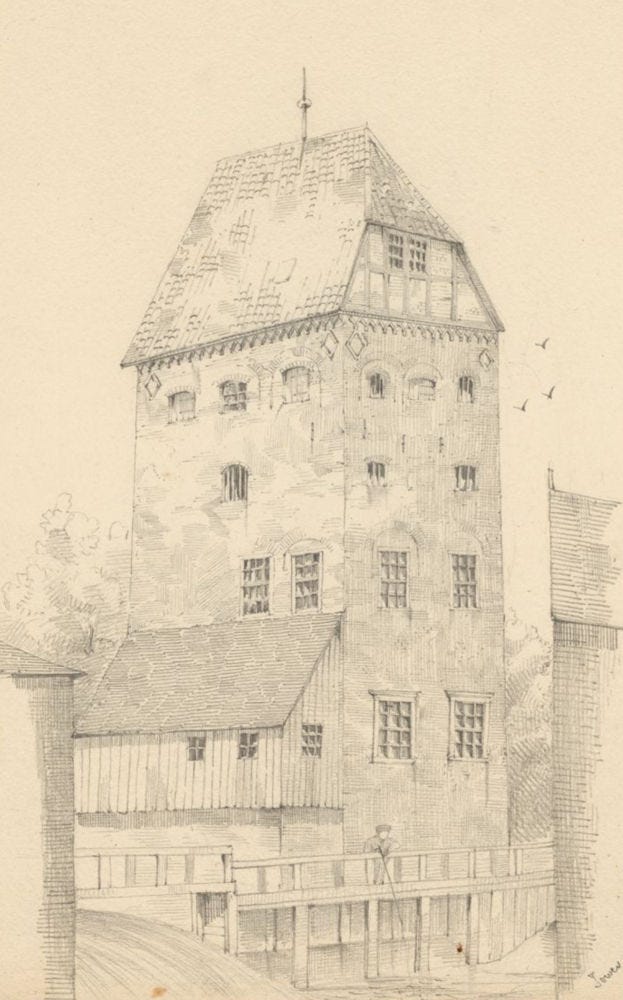
At the bottom right corner there was a handwritten mark. I assumed it was the artist’s signature, which would give me a name to search for. It didn’t. The mark was too faint to read and led nowhere.
Dead end: reverse image search on the sketch
My first move was the obvious one: run the sketch through Google’s reverse image search. The results were all over the place: medieval towers in Rothenburg, a watercolor of a gate in Weißenhorn, architectural drawings from Pinterest, and an engraving from Alsace.
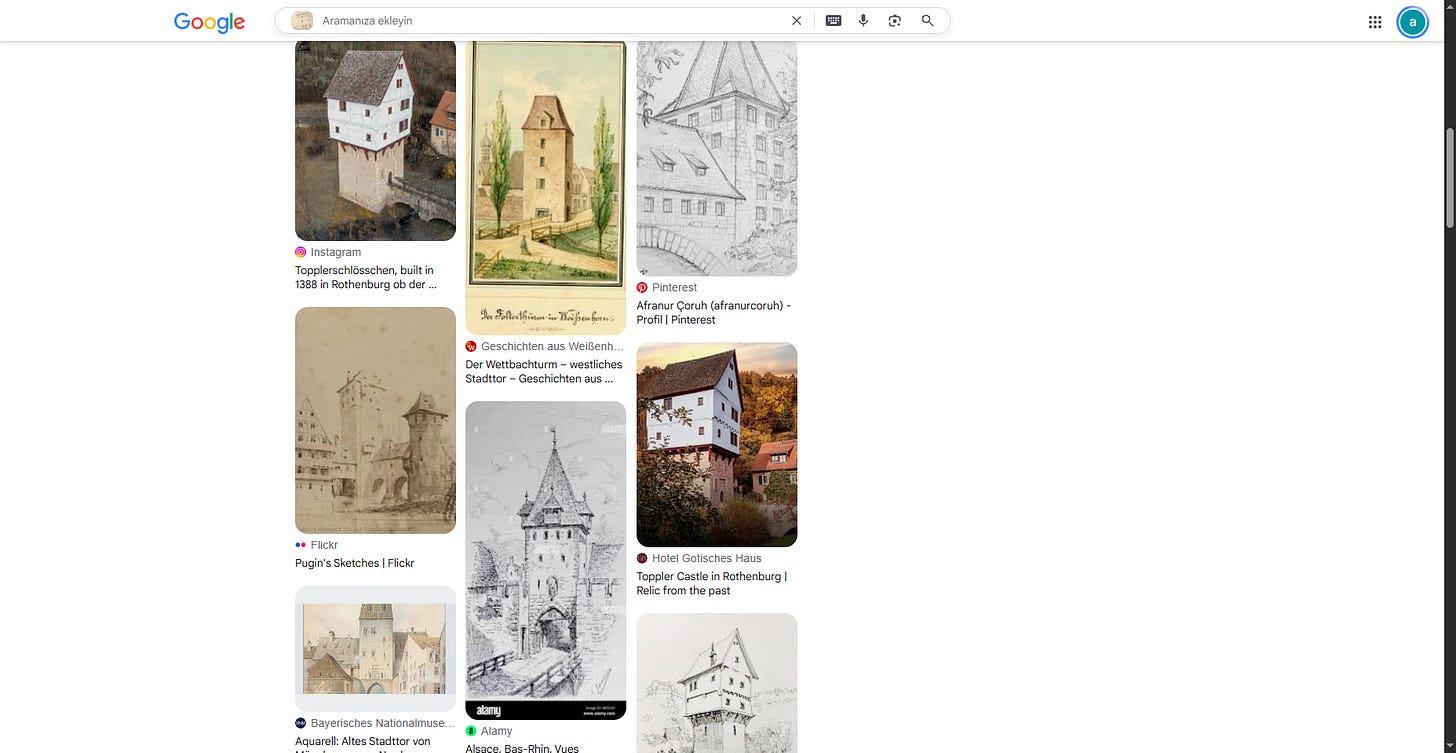
The problem was clear. These systems match photographs of real objects much better than grayscale line drawings. The sketch had the shape of a tower, but nothing the algorithm could latch onto.
The idea: colorize it
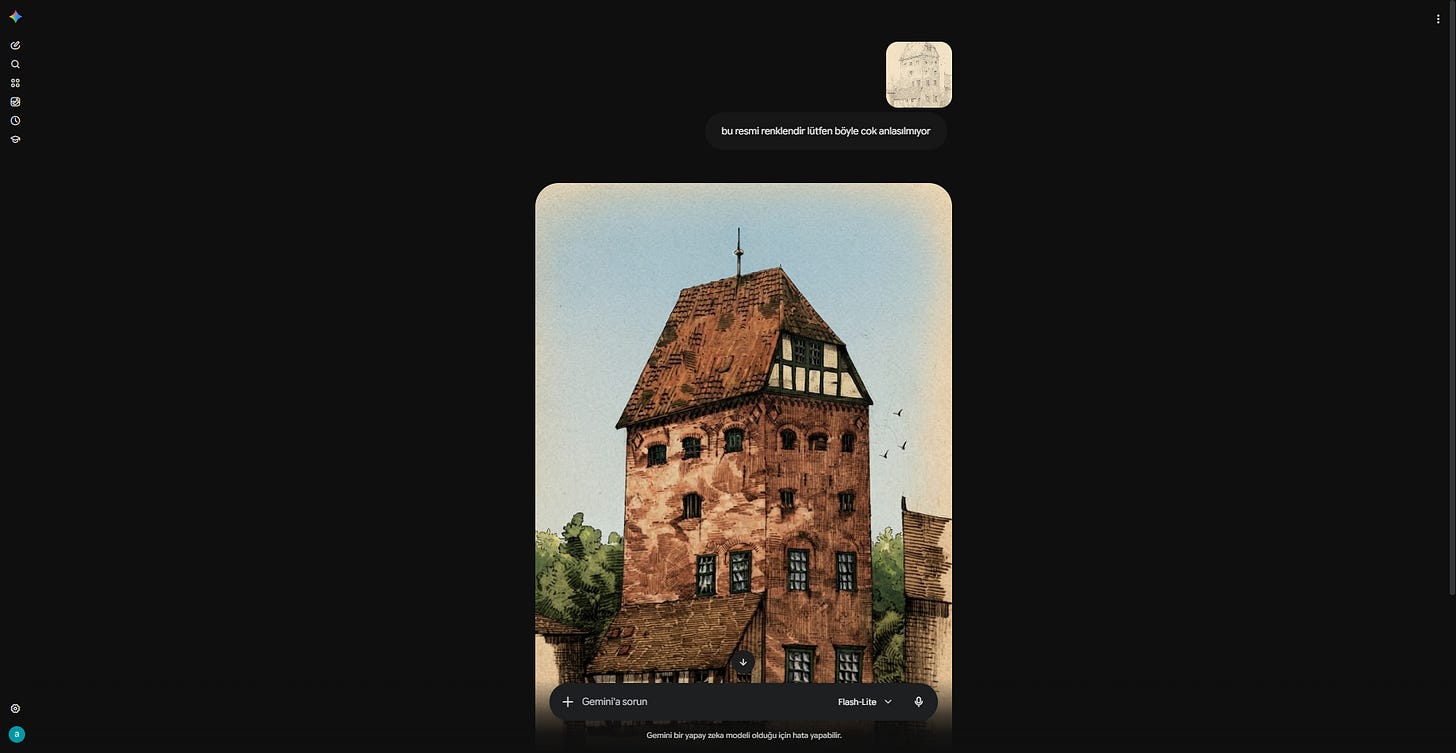
If the search engine understood photos better than sketches, I could make the sketch look more like a photo. I uploaded the drawing to an AI model and asked it to colorize the image.
Breakthrough: a match
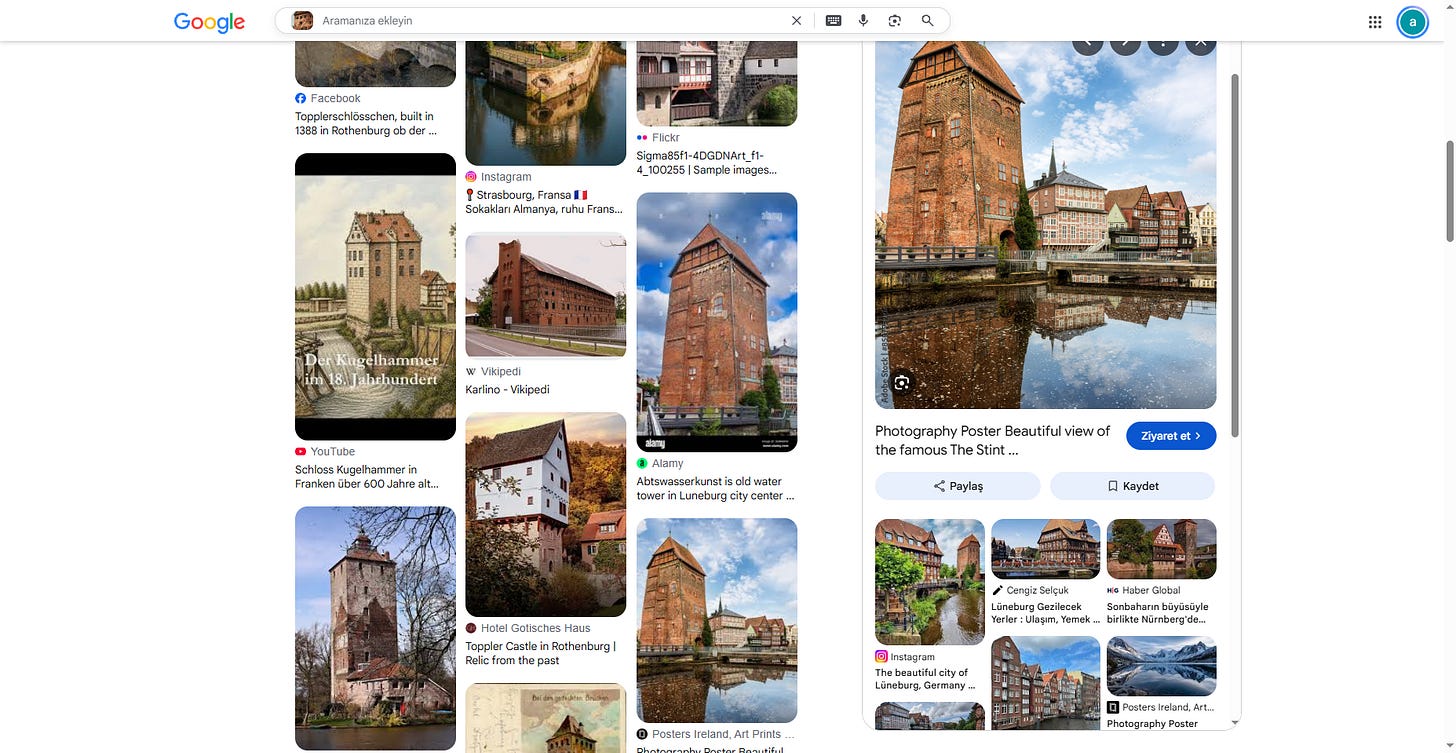
I ran the colorized image through reverse image search. This time the results changed: photos of a tall, red-brick tower with a half-timbered gable and a steep roof, standing right next to the water. Several of them were labeled Abtswasserkunst in Lüneburg, Germany.
Confirming the location
The Abtswasserkunst is a water tower on the Ilmenau river in Lüneburg, in Lower Saxony. It dates back to 1530 and was built to draw water from the river into the city, supplying breweries and some patrician houses. It is considered one of the oldest water towers in Germany. It stands beside the Abtsmühle, a former mill.
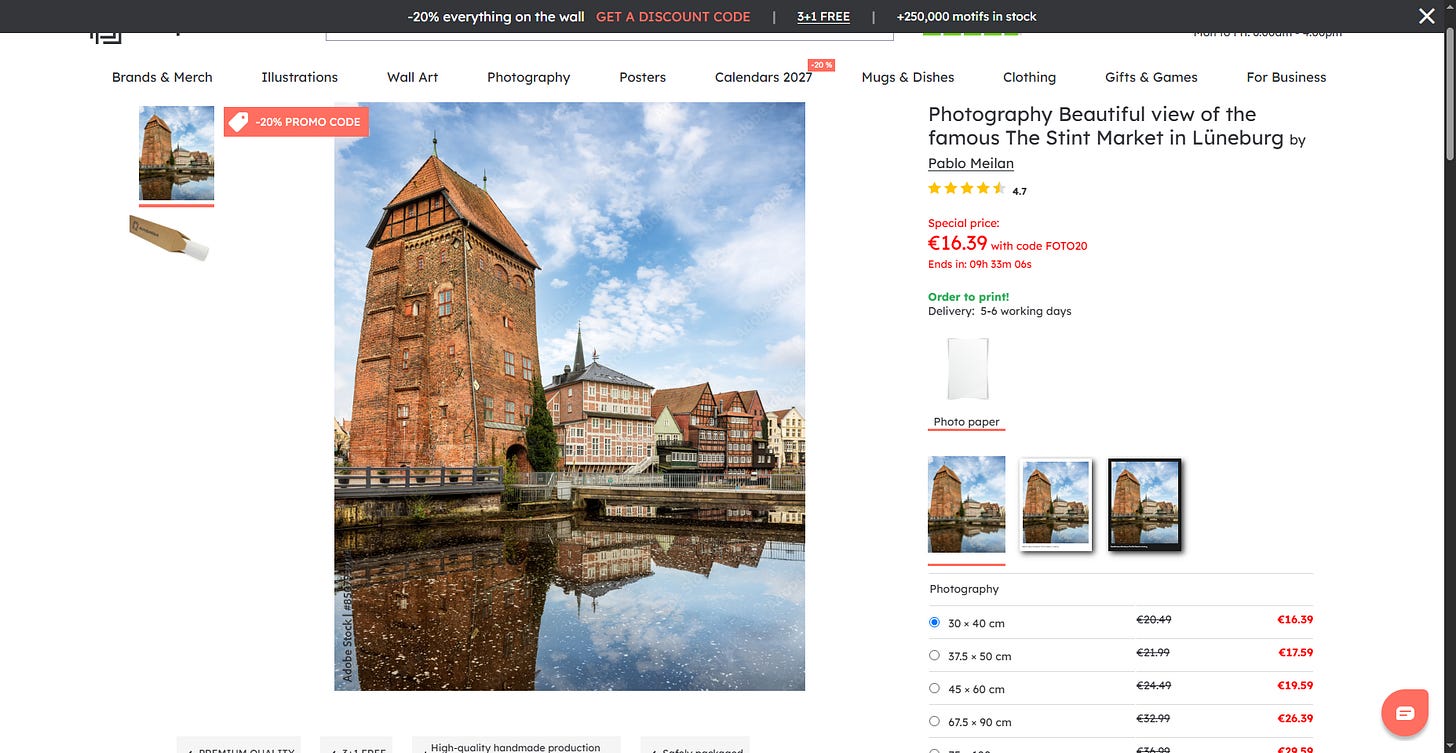
Comparing the two, the match holds up on the details that matter:
- the tall, narrow, rectangular brick shape
- the steep roof with a half-timbered gable below the peak
- the decorative band of brickwork under the eaves
- the position right next to the water, with a bridge nearby
Reading the building next to it
The question asked about the building to the right of the tower, “when viewed from the same perspective.” Stock photos won’t answer that, because they are usually taken from the opposite bank. I needed the view that matches the sketch.
I opened Google Maps and searched for the tower. Street View, taken from the water’s edge on the same side as the artist, gave me almost exactly the sketch’s angle: the tower on the left, a tall brick building on the right, and the river and bridge at the bottom.
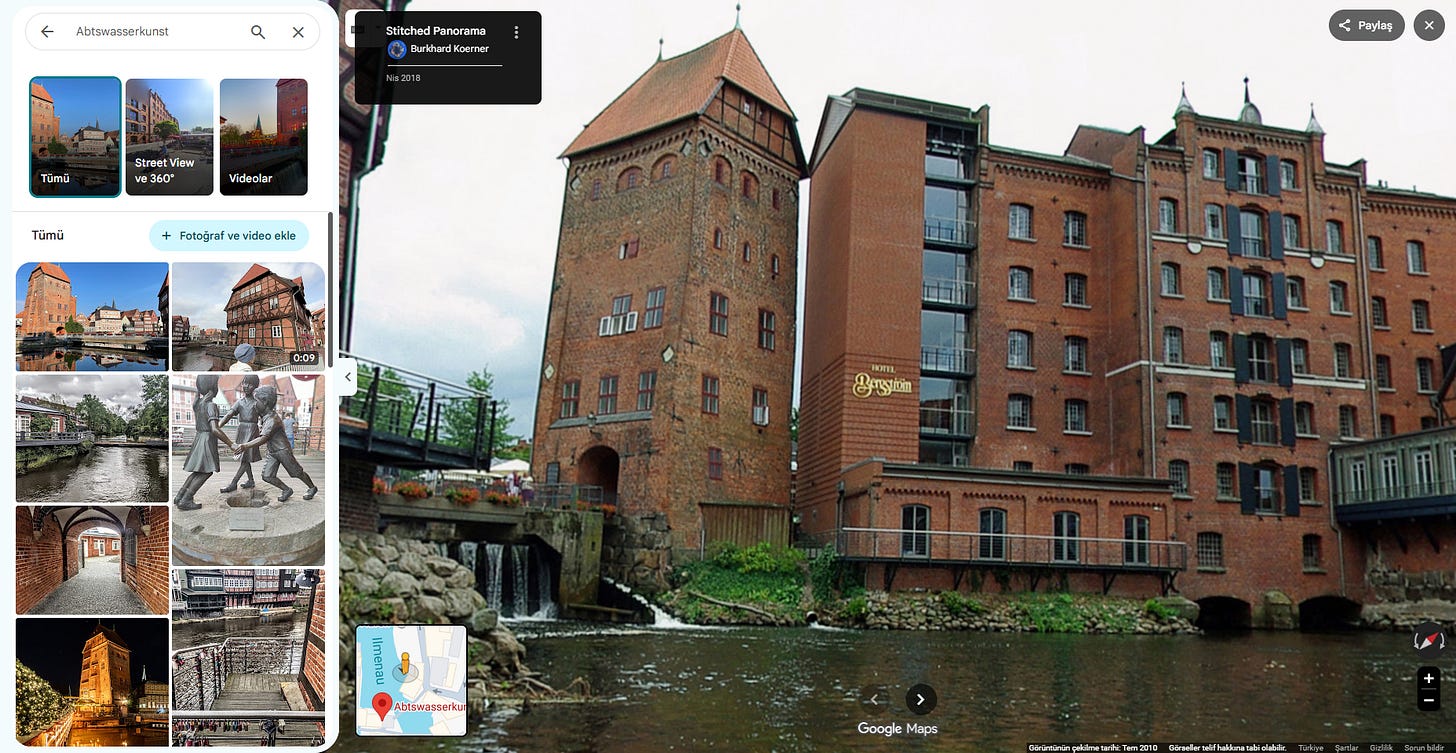
That is the answer. The former mill beside the tower is now part of the Bergström Hotel in Lüneburg, and its façade says “Hotel Bergström.”
Let’s connect
If you enjoyed this write-up, or you have a sketch of your own that needs identifying, I’d love to hear from you.
LinkedIn: Alp Akciğer
Originally published on Substack