OSINT Case Study: Knife Attack in Times Square
Bu çözümün Türkçesi de var: sağ üstten dili TR yapın.
Open-Source Intelligence (OSINT) often bridges the gap between breaking real-world news and meticulous product identification. In this walkthrough, I document the end-to-end investigation methodology used to solve the “KNIFE ATTACK” challenge: tracing a real-world crime incident, isolating physical evidence, identifying a commercial cutlery set, and extracting its retail UPC barcode alongside metric blade dimensions.
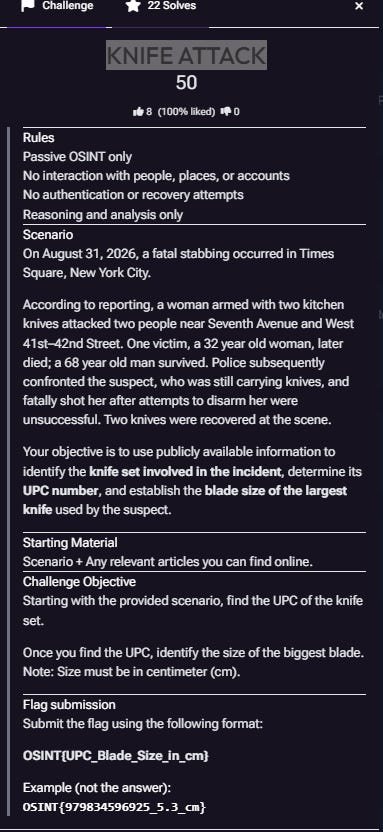
Challenge Briefing
The scenario presents a fatal stabbing incident that took place on August 31, 2026, near Seventh Avenue and West 41st–42nd Street in Times Square, New York City. A female suspect attacked two individuals with kitchen knives, fatally striking one victim and injuring another, before being neutralized by law enforcement.
Objective:
- Identify the exact knife set involved.
- Retrieve its 12-digit UPC number.
- Determine the blade length of the largest knife in the set in centimeters ($cm$).
- Format the flag:
OSINT{UPC_Blade_Size_in_cm}
Step 1: Query Formulation & Incident Corroboration
The scenario provided strict anchor data:
- Date: August 31, 2026
- Location: Times Square, Manhattan, NYC
- Key Event: Fatal stabbing involving two kitchen knives
To uncover the real names of the individuals involved and access primary news reports, I initiated an initial query:
On August 31, 2026, a fatal stabbing times square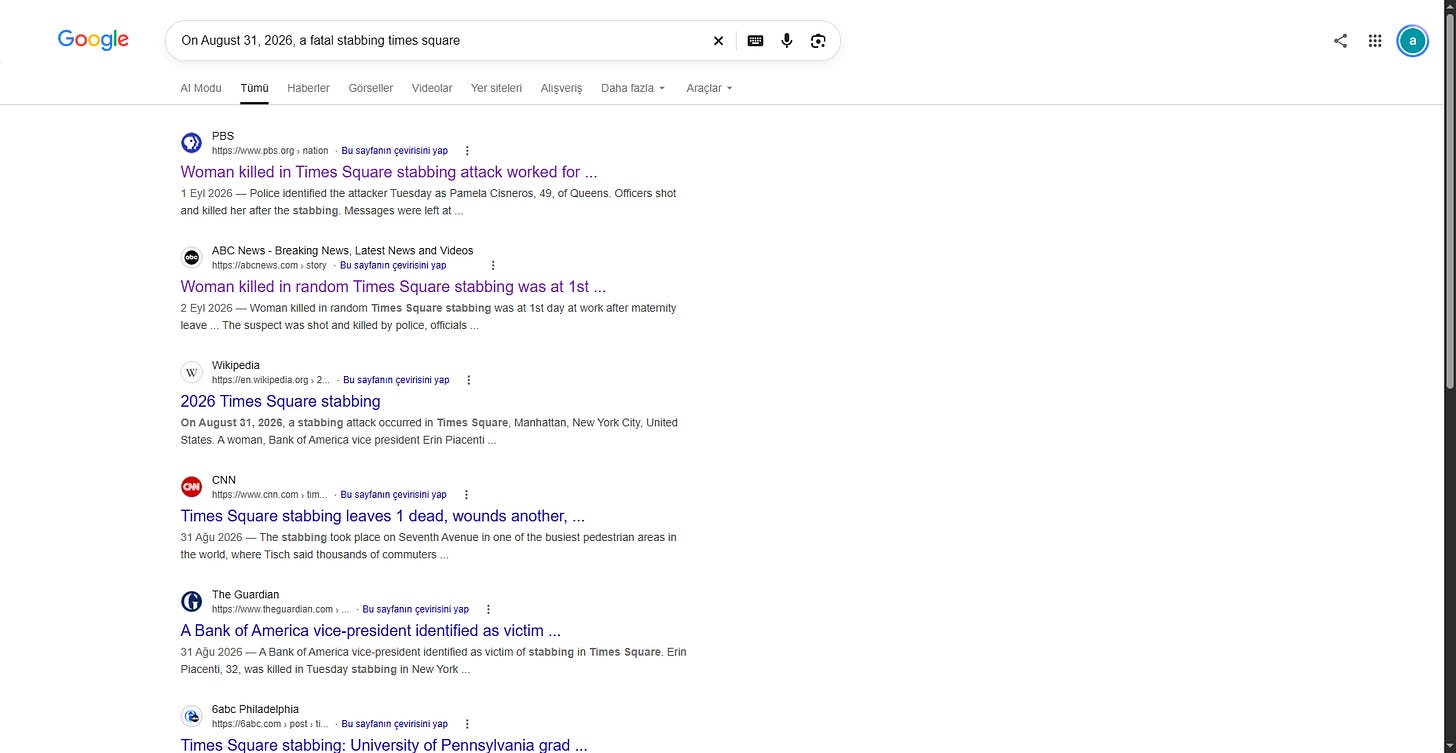
The news hits confirmed the timeline:
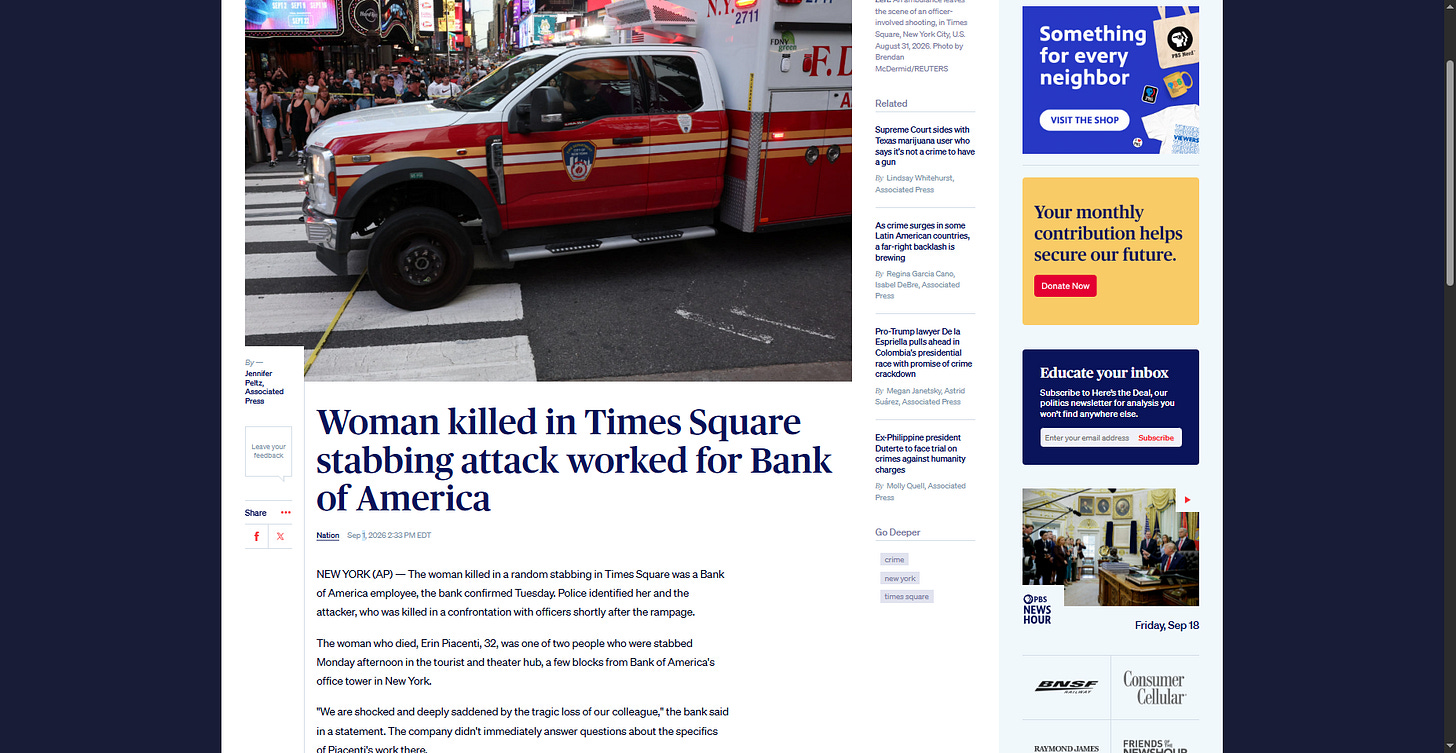
- Attacker: Pamela Cisneros (49, Queens, NY)
- Victim: Erin Piacenti (32)
Cross-referencing the ages and incident dates from the news coverage confirmed that this was the exact event described in the challenge.
Step 2: Evidence Isolation via Image Dorking
With the suspect’s identity verified, I shifted the investigation to physical evidence: the recovered kitchen knives. I ran a targeted image search:
Pamela Cisneros knife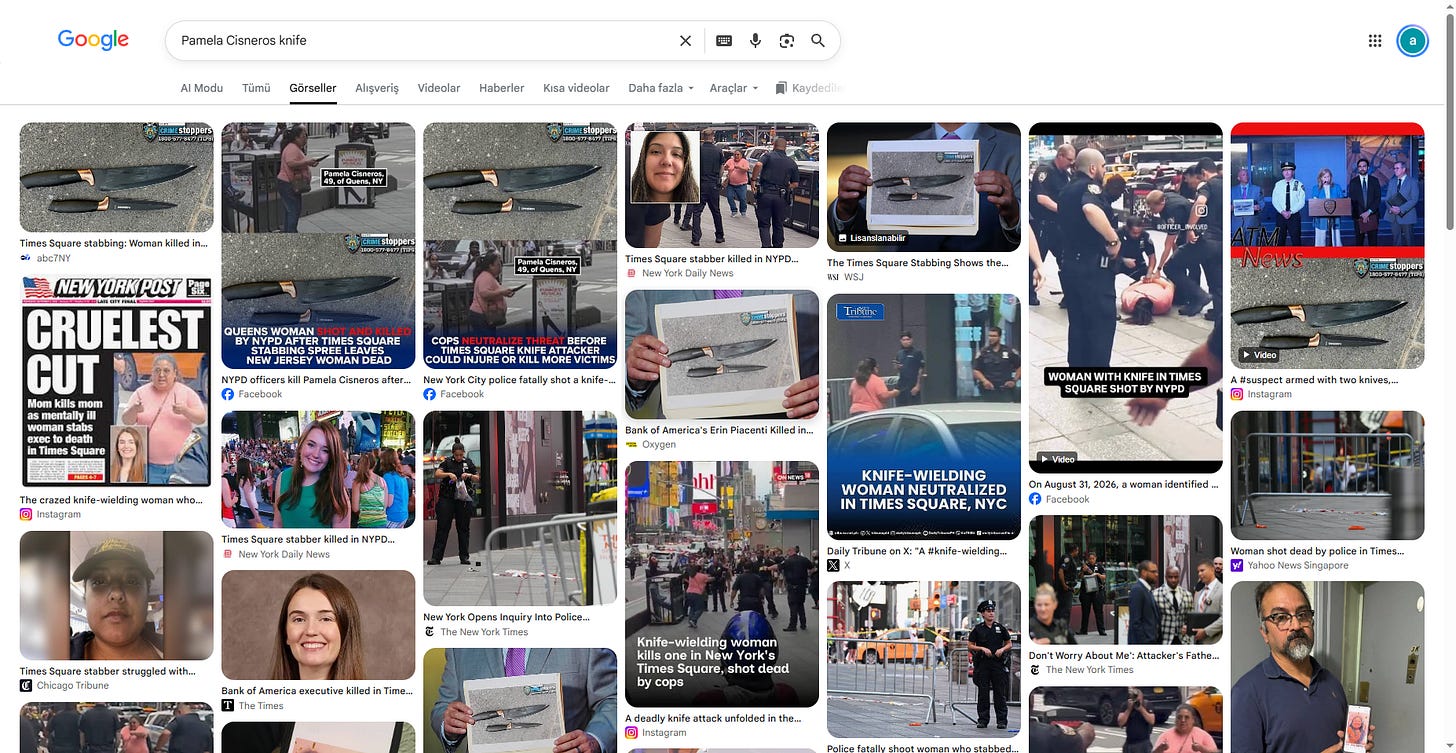
While several thumbnails showed the evidence laid out on pavement and held up at press briefings, most images suffered from compression artifacts or perspective distortion. To extract the manufacturer name and any factory identifiers stamped on the blade, I needed the highest-resolution copy available.
Step 3: Reverse Image Search & Model Pinpointing
I isolated the press conference placard showing the two recovered knives and executed a reverse image search using Google Lens to track down original web uploads
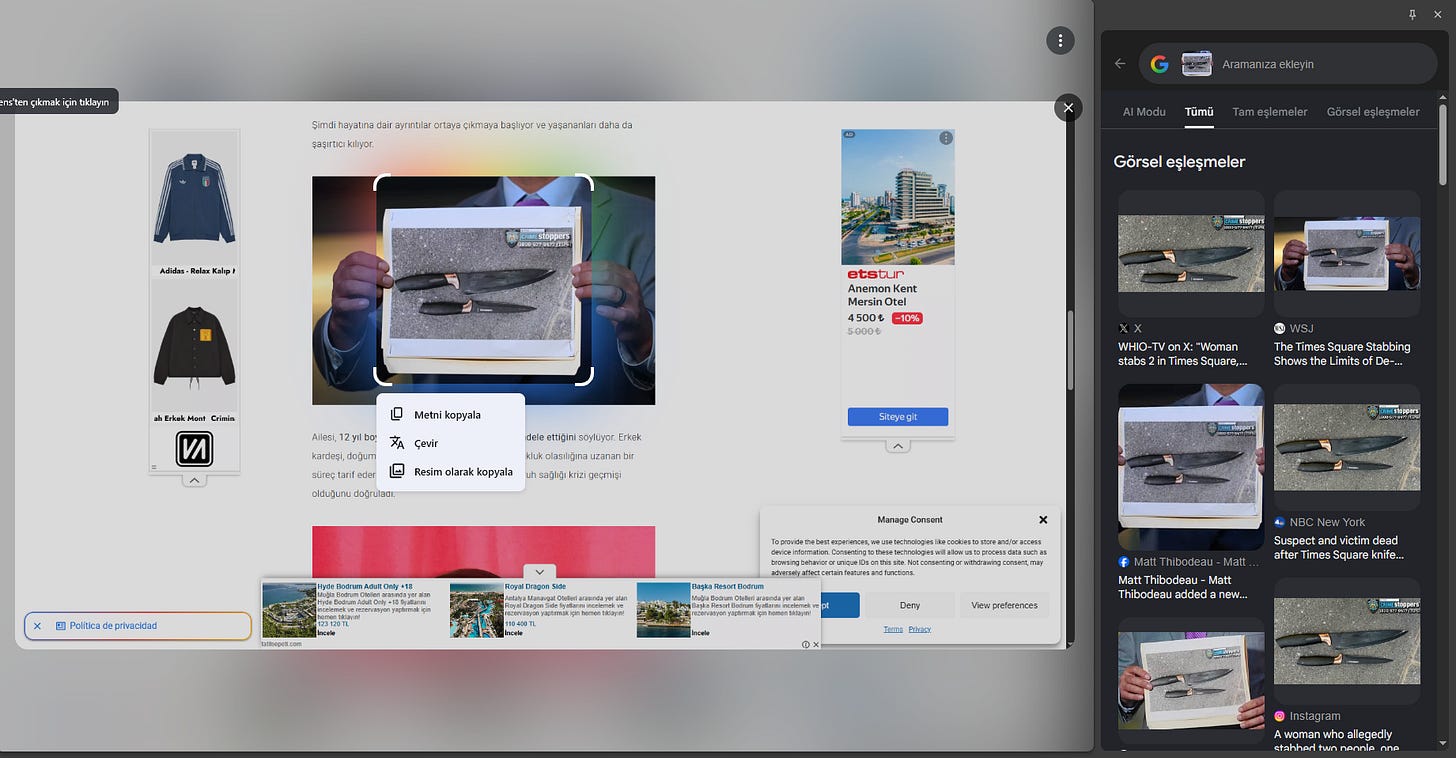
Inspecting the high-resolution evidence photo revealed the branding: Farberware.Underneath the Farberware logo, an alphanumeric serial/model print was visible: 21B788.
A commercial query with this model print led directly to active secondary market listings matching the black blade and copper bolster configuration.
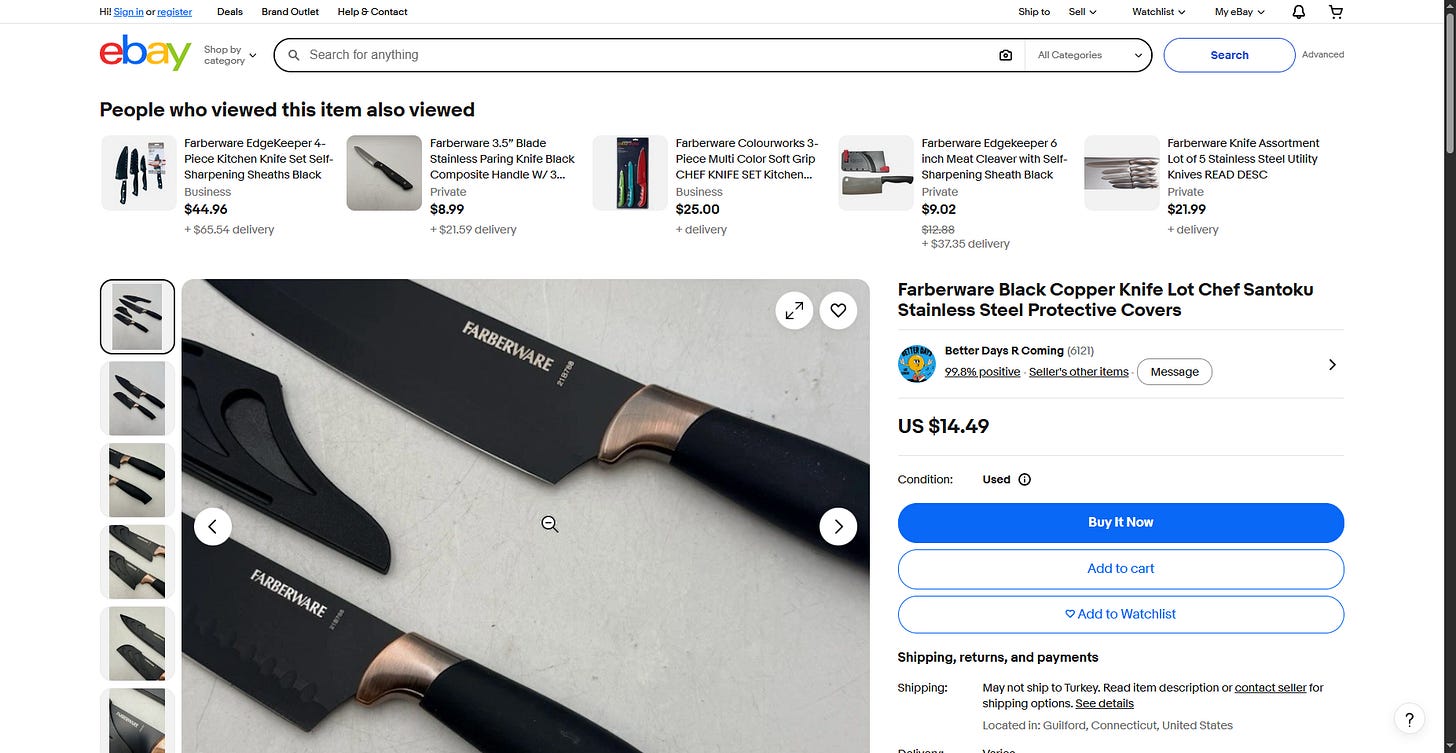
Step 4: UPC Retrieval & Set Specifications
While 21B788 is a manufacturing batch/blade code, retail tracking relies on a 12-digit Universal Product Code (UPC) assigned to the boxed set.
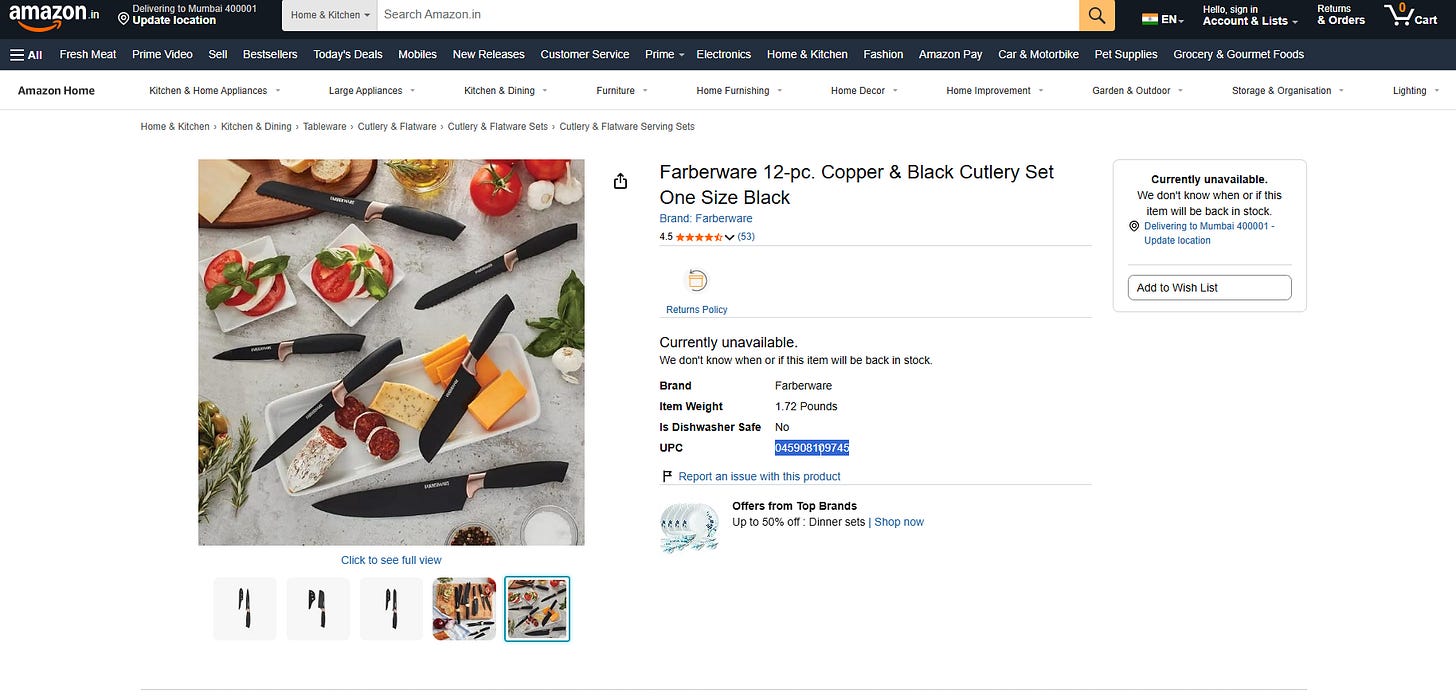
Searching for the complete multi-piece set matching this design (“Farberware 12-pc. Copper & Black Cutlery Set”) brought up the official retail specification page on Amazon.
Under the product specifications table, the UPC was indexed:
- UPC:
045908109745
Step 5: Metric Blade Dimension & Flag Assembly
The final requirement was to establish the blade size of the largest knife in the set in centimeters.
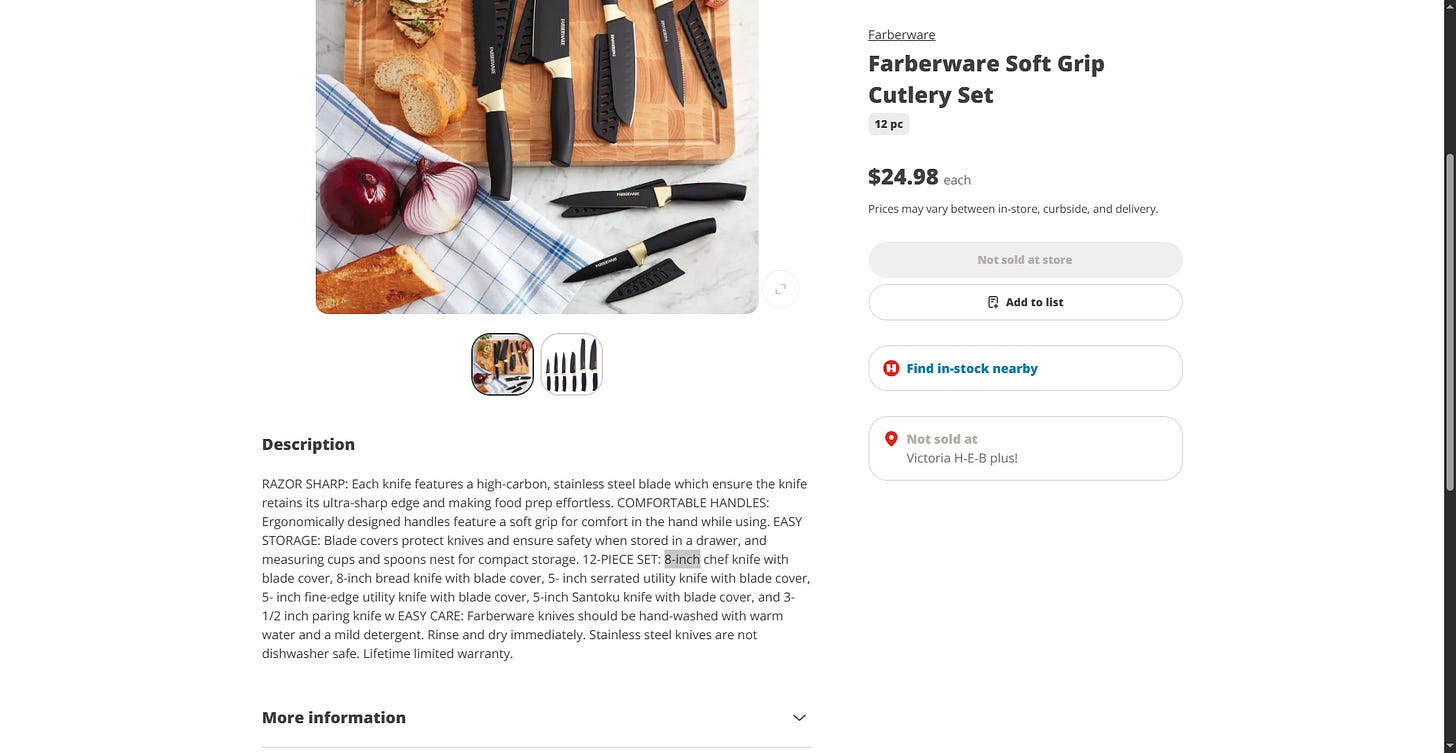
Checking the detailed breakdown of the 12-piece set on retail inventories revealed the collection:
- 8-inch chef knife
- 8-inch bread knife
- 5-inch serrated utility knife
- 5-inch Santoku knife
- 3.5-inch paring knife
The largest blade featured is the 8-inch chef’s knife.
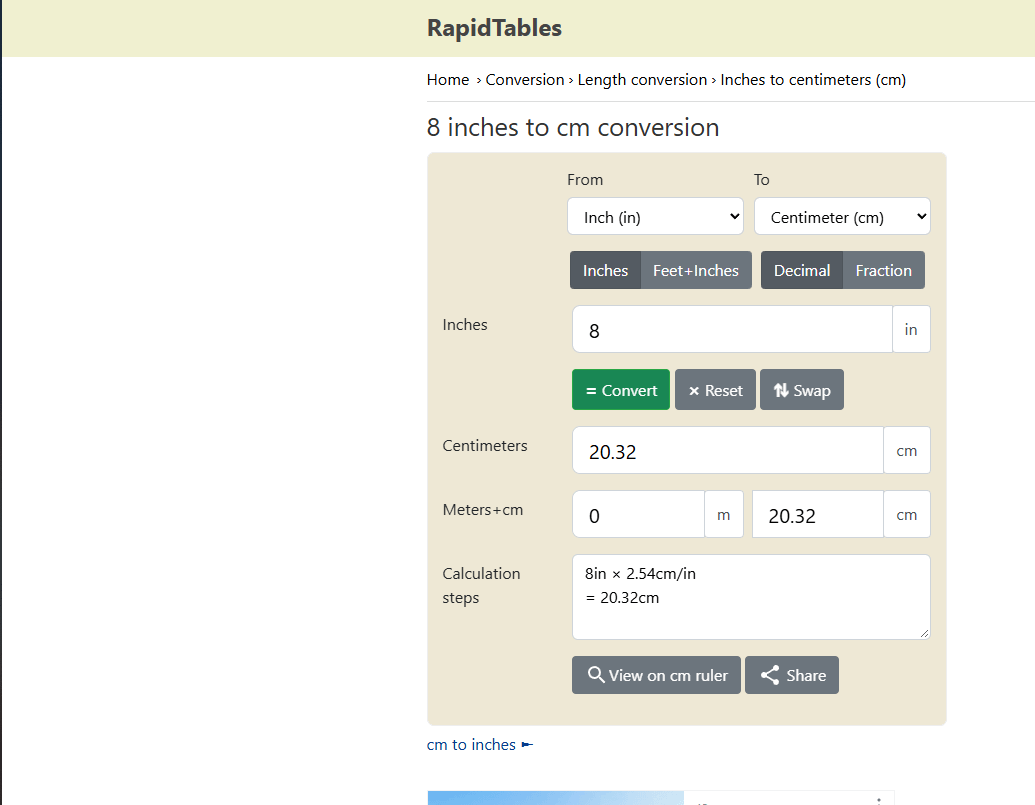
Since United States retail specifications utilize imperial measurements, a conversion to metric was required ($1\text{ inch} = 2.54\text{ cm}$):
$8\text{ in} \times 2.54 = 20.32\text{ cm}$
Rounding to one decimal place yielded 20.3_cm.
Constructing the final flag according to the required schema:
OSINT{045908109745_20.3_cm}Key Takeaways
- Anchor Pivoting: Start broad with verified temporal and geographical anchors to pinpoint primary entities before zooming into secondary physical clues.
- Evidence Resolution: Low-res evidence photos often obscure critical stamps; leveraging reverse image search tools (Google Lens / Yandex) helps unearth the original high-definition press files.
- Manufacturing Code vs. UPC: Factory stamps on consumer products often denote blade or mold numbers rather than retail barcodes. Identifying the retail packaging set is essential to uncover the true UPC.
Connect & Follow
- LinkedIn: Alp Akciğer
- TryHackMe: alpakciger
- GitHub: alpakciger
Originally published on Substack